

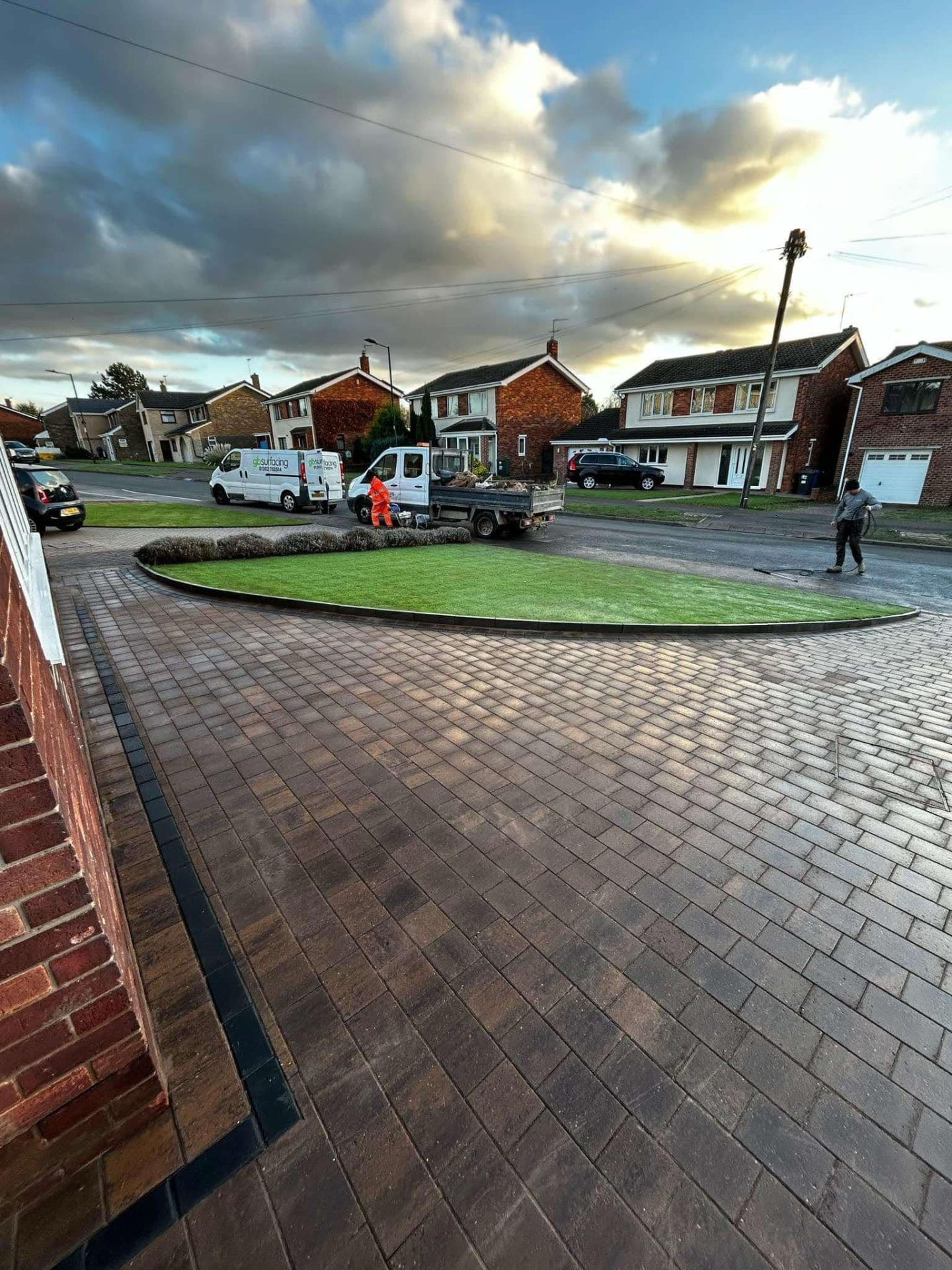
by GBSurf | Aug 28, 2026 | Blog
Few things undermine a newly laid driveway faster than water that refuses to drain away. Puddles that linger for days, ice patches in winter, and slow erosion of jointing sand are all signs of a drainage problem — and left unaddressed, they can shorten the lifespan of even a well-installed surface by years. For homeowners looking into new driveways Barnsley residents can rely on, understanding drainage is just as important as choosing the right material. Here’s what actually causes pooling and how it’s properly fixed.
Why Water Pooling Happens in the First Place
Pooling is rarely random. It almost always comes down to one of these root causes:
Incorrect fall or gradient – Every driveway needs a slight slope (typically around 1:60 to 1:80) to direct water away from the house and toward a drainage point. If this gradient wasn’t calculated correctly during installation, water has nowhere to go.
Compacted or settled sub-base – Over time, the sub-base beneath a driveway can settle unevenly, especially if it wasn’t compacted properly at the time of installation. This creates dips where water naturally collects.
Blocked or missing drainage channels – Many driveways rely on channel drains, soakaways, or gullies to carry water away. If these become blocked with debris or were never installed in the first place, water simply has nowhere to escape.
Non-permeable surfacing without adequate runoff planning – Solid surfaces like poured concrete or sealed tarmac don’t allow water to soak through, so if the surrounding drainage isn’t designed to handle the volume, pooling becomes inevitable — particularly during heavy rainfall, which is a common concern across South Yorkshire’s varied weather.
The Real Cost of Ignoring It
Standing water isn’t just an inconvenience. Left untreated, it can:
- Seep into hairline cracks and expand them through repeated freeze-thaw cycles in winter
- Wash out jointing sand between block paving, causing individual blocks to shift or become loose
- Create slippery, hazardous surfaces in colder months
- Gradually undermine the sub-base, leading to more significant structural failures over time
What starts as a minor cosmetic annoyance can, within a few years, turn into a costly resurfacing job.
Fixing the Problem Properly
Re-grading the surface – In cases where the slope was never correctly established, the only long-term fix is to lift the affected area and relay it with the correct fall.
Installing or unblocking drainage channels – A simple channel drain positioned at the lowest point of the driveway can resolve pooling issues without requiring a full resurface, provided the underlying gradient is otherwise sound.
Switching to permeable paving – For driveways prone to persistent pooling, permeable block paving or resin-bound surfacing allows water to drain through the surface itself and into a specially designed sub-base, removing the problem at its source rather than just redirecting it.
Installing a soakaway – Where mains drainage isn’t practical or permitted, a soakaway allows water to disperse gradually into the surrounding ground, which is particularly useful for larger driveways with significant surface runoff.
Prevention Is Cheaper Than the Cure
The best time to solve a drainage problem is before the driveway is even laid. A properly assessed gradient, correctly compacted sub-base, and appropriate drainage provisions built in from the start will save homeowners from dealing with pooling issues years down the line — and the cost of getting it right the first time is almost always lower than fixing it retrospectively.
When to Call in a Professional
If your driveway is regularly pooling water, it’s worth having it assessed by an experienced installer rather than attempting a DIY patch-up. Surface-level fixes like adding extra jointing sand or filling in low spots rarely address the underlying cause, and can end up masking a problem that gets worse over time. For anyone researching driveways Barnsley homeowners have installed recently, choosing a contractor who assesses drainage properly from the outset — rather than treating it as an afterthought — is one of the most valuable steps you can take.